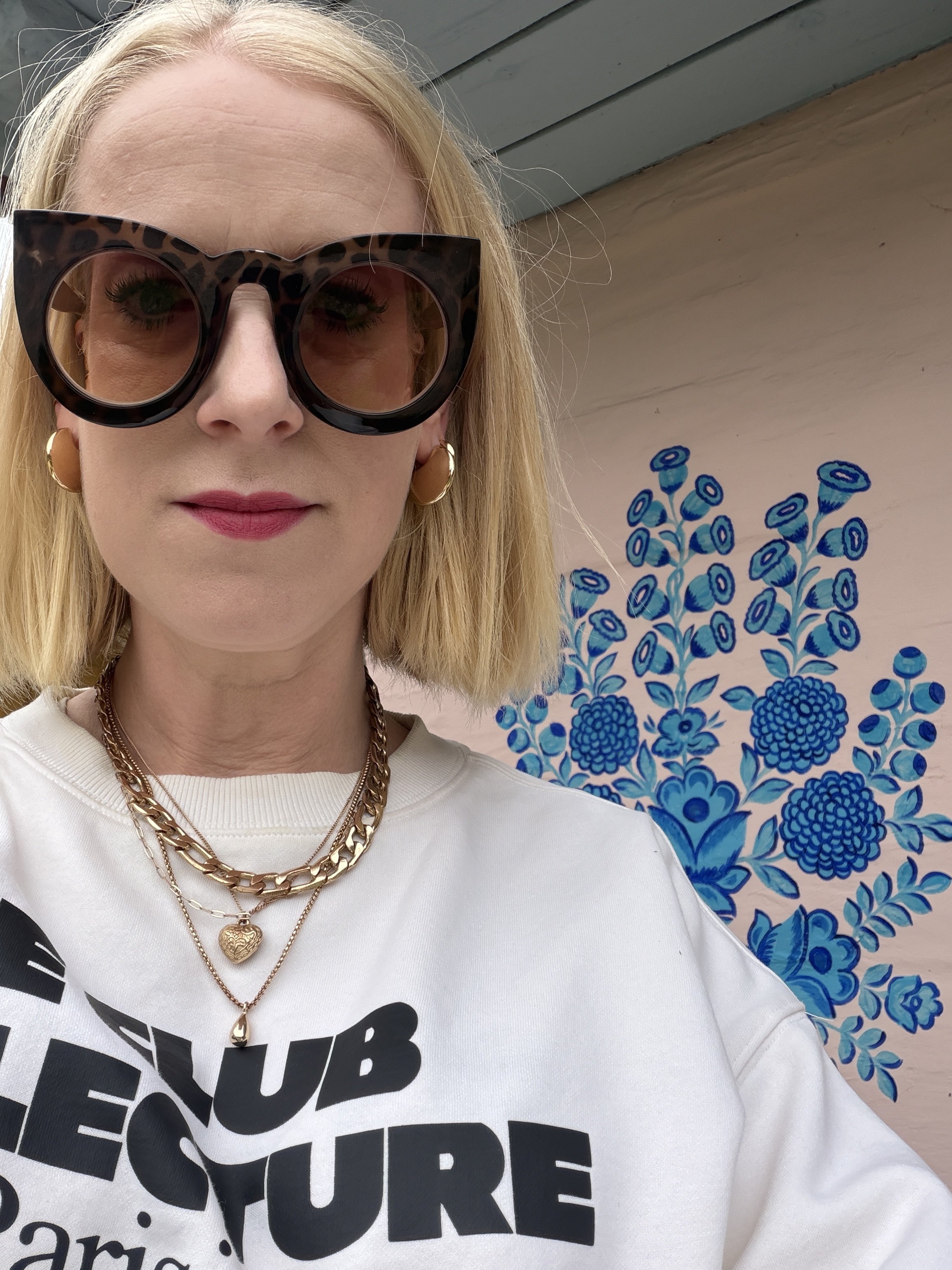
Zalipie
The Village Where Art Escaped the Frame
I've been wanting to go to Zalipie for as long as I remember. My granddad was from Kraków which is very nearby, so it's always been on my radar.
It's a small village in southeast Poland, famous for its painted houses. But that description doesn't really prepare you for what it's actually like.
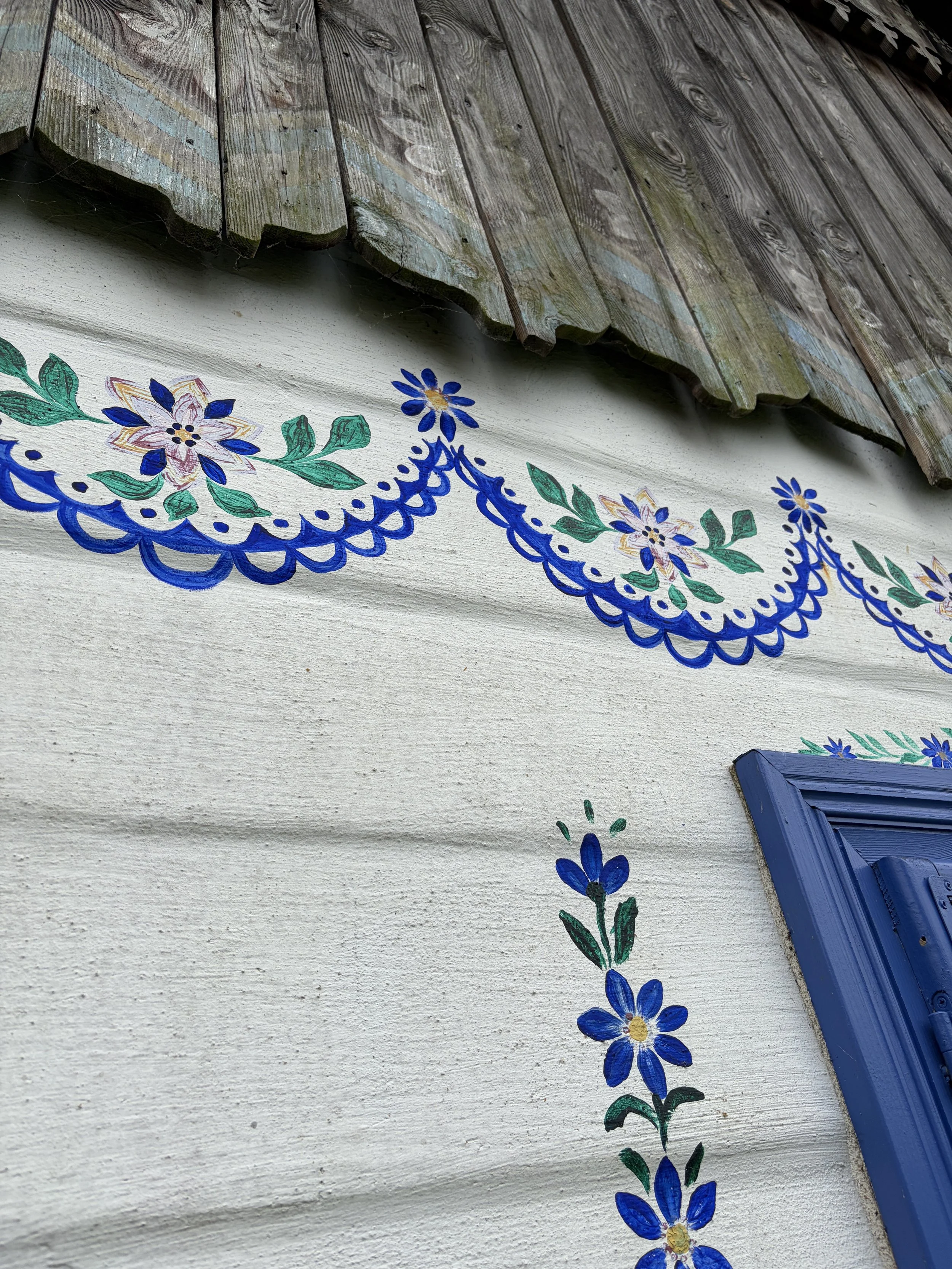
The wooden houses, many with their original thatched roofs, are covered in hand-painted flowers. On the outside, but also on the inside too. Walls. Ceilings. Flowers painted on the original stoves, furniture, tables, chairs, cupboards. Every surface feels like it has been touched by someone's hand. There are even paintings hanging on top of the painted walls.
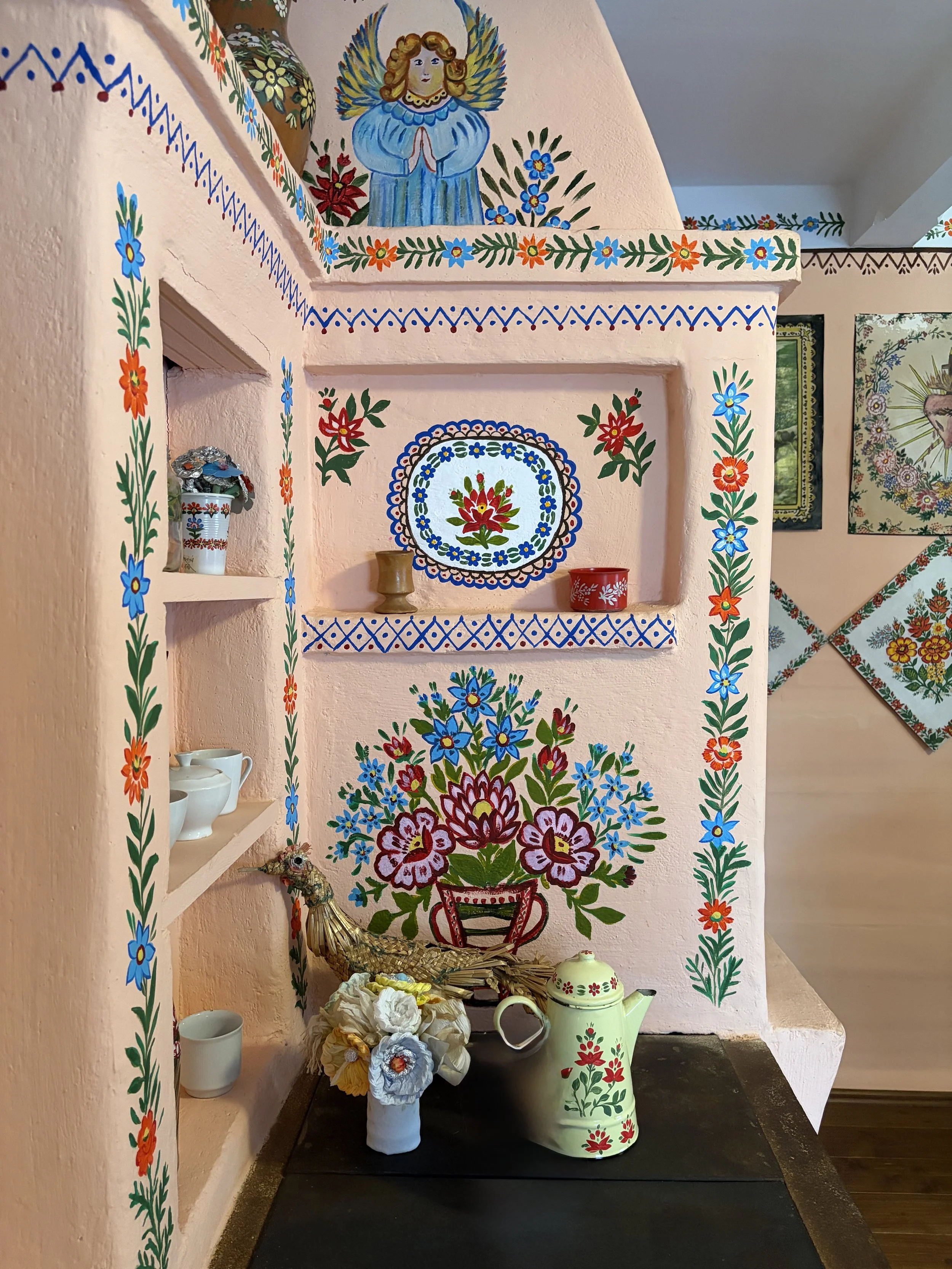
And the houses were all painted by women from the area. Every home has its own personality. Every artist has her own style. They're all working within the same tradition, yet none of them look the same.
What surprised me most wasn't the painting itself.
It was the attention to detail.
The scalloped paper borders running just below the ceiling. The delicate wycinanki paper cut-outs hanging above the curtains, moving gently whenever a breeze drifted through an open window. Tiny painted details tucked inside glass-fronted cabinets and shelves, as though beauty wasn't reserved for the things visitors would immediately notice.
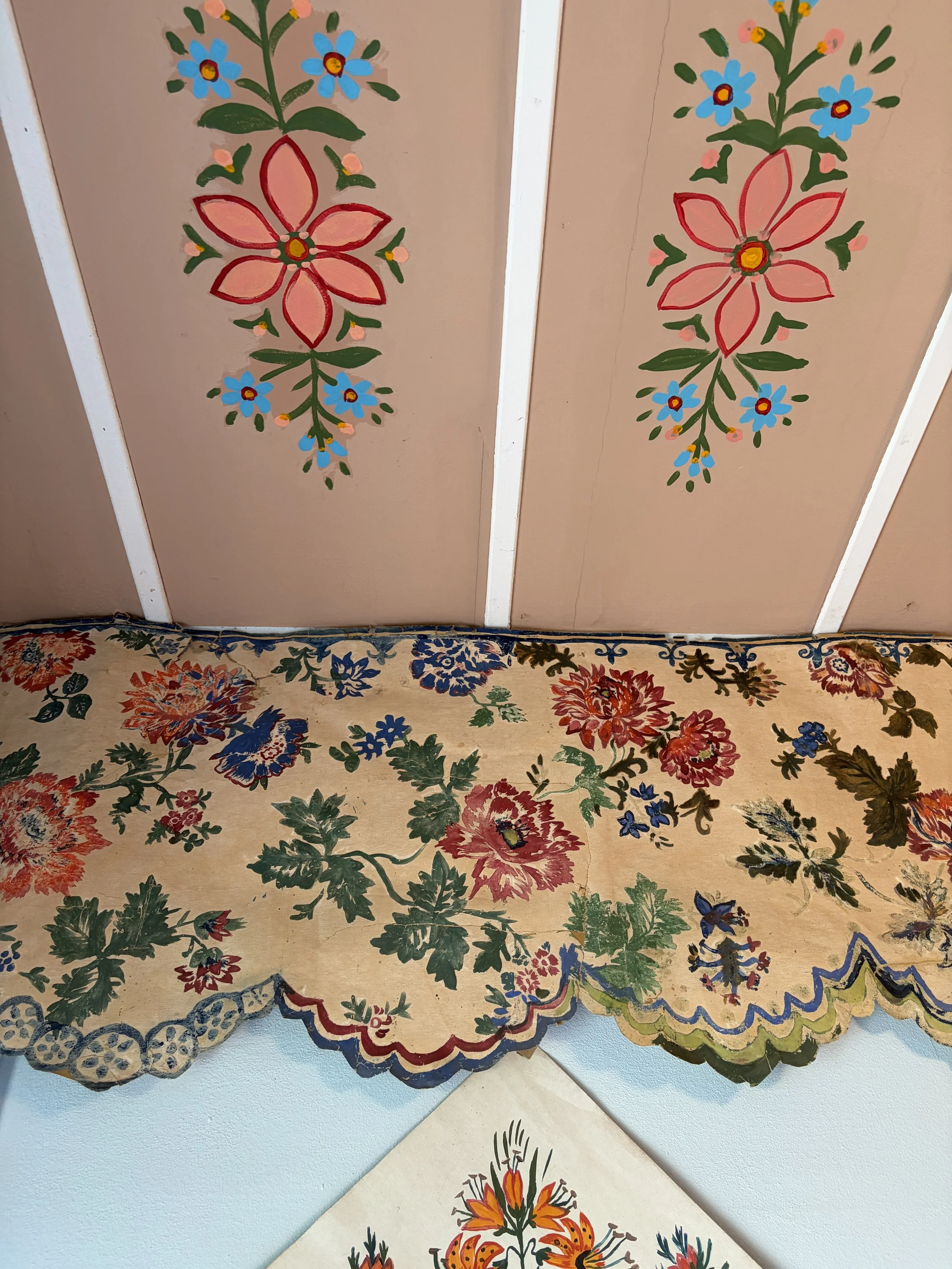
Nothing felt accidental.
It reminded me of Charleston House in Sussex, where Vanessa Bell transformed her home into a living work of art, painting walls, fireplaces, furniture and doors until the distinction between art and everyday life almost disappeared.
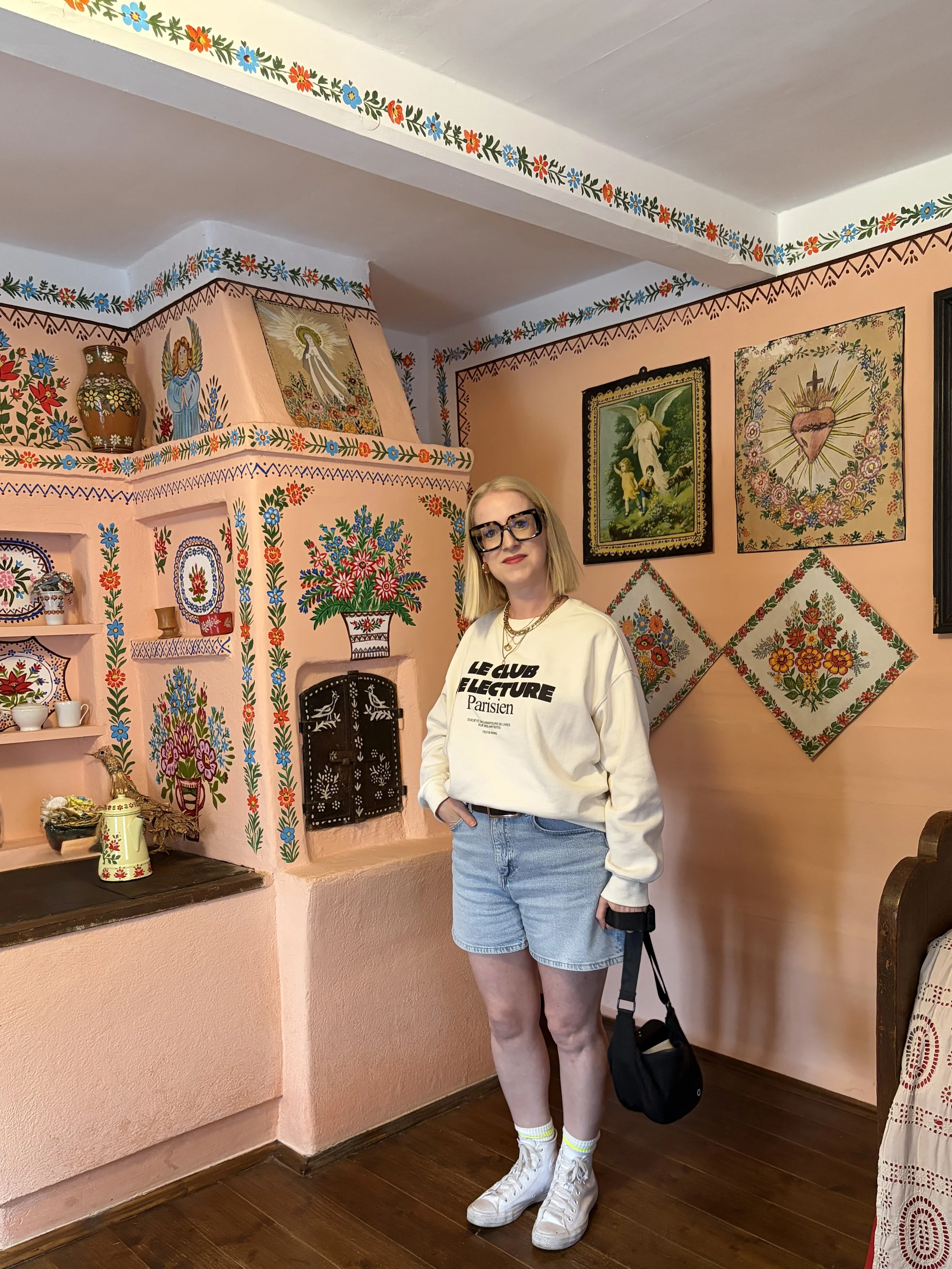
The styles couldn't be more different. Vanessa Bell's Bloomsbury Post-Impressionism is a world away from the bright folk florals of Zalipie's celebrated painters, including Felicja Curyłowa and Stefania Łączyńska. The colours are different. The traditions are different. The styles are different. The histories are different.
But they arrived at the same conclusion.
Art doesn't only belong on a canvas.
It belongs in the places where life happens.
One of the things I loved most was the colour. It felt incredibly fresh. Bright, optimistic and completely unapologetic. There was one particularly colour that caught my attention. At times I caught myself thinking of Yves Klein blue, the blue at the YSL Museum in Marrakech or even the Little Greene Mambo paint in my own downstairs powder room.
But it wasn't either of those.
It was Zalipie blue.
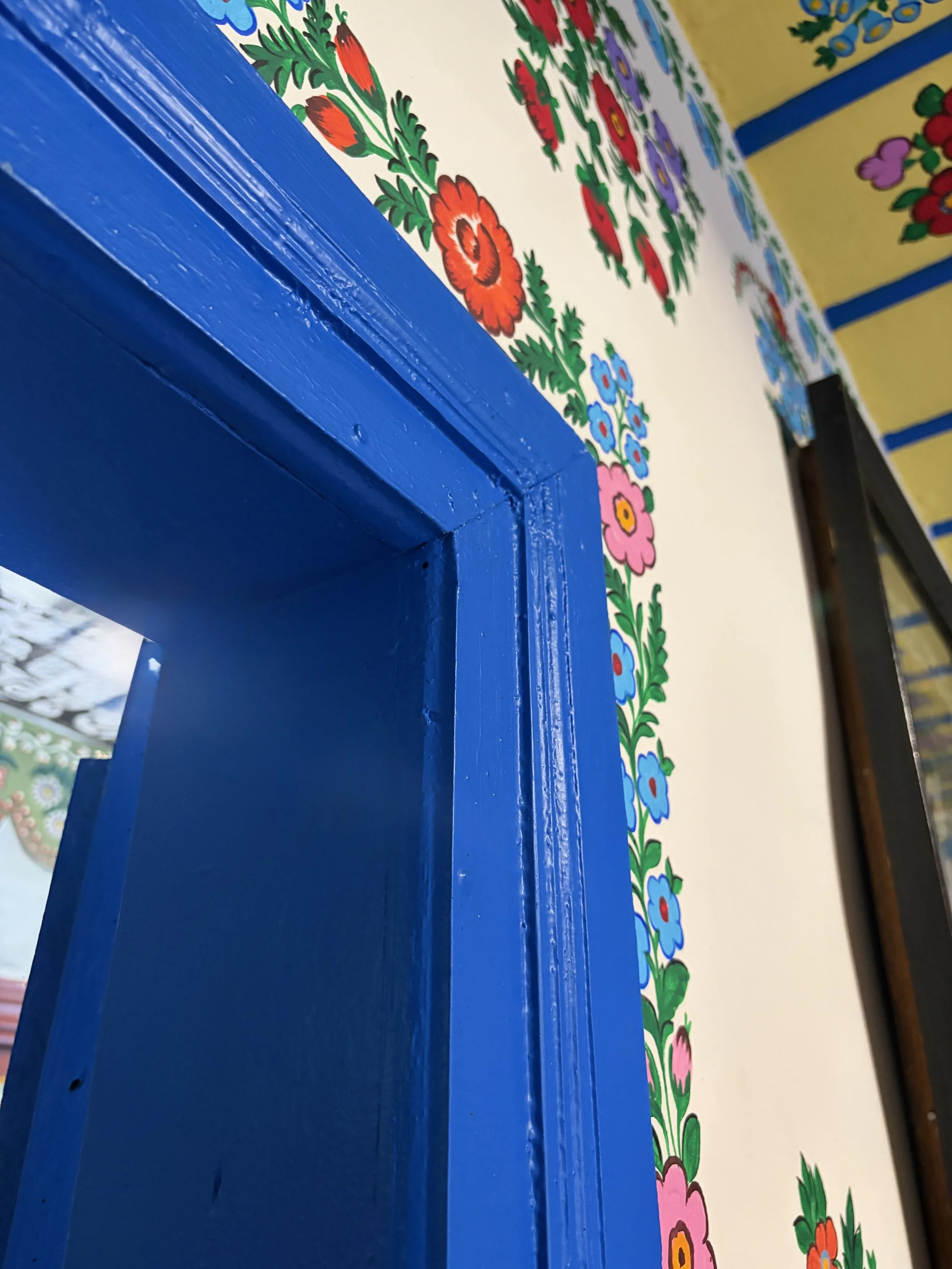
A colour that was born from a particular place, a particular tradition and a particular way of seeing the world.
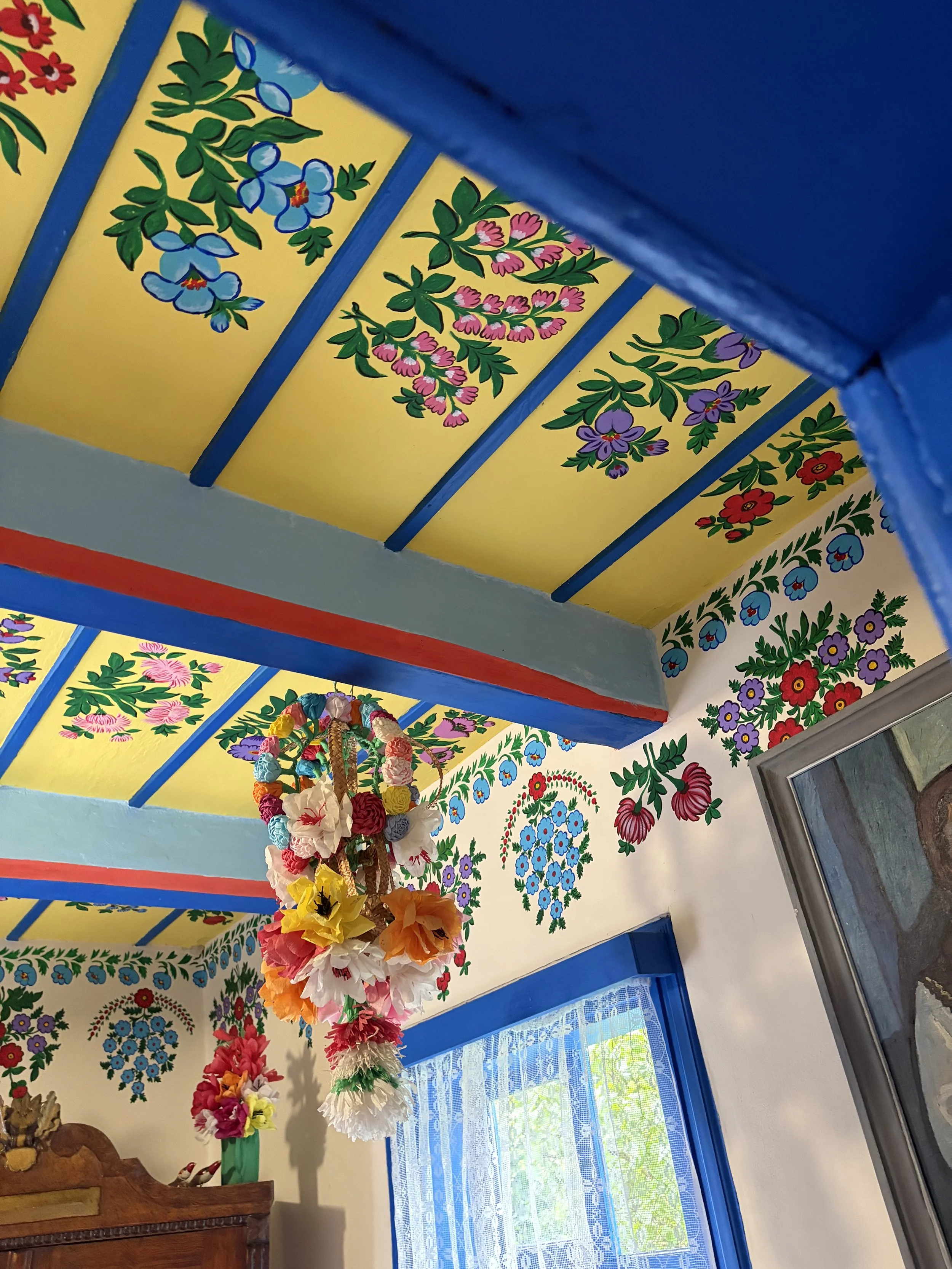
Walking through the village, I found myself thinking about taste. Not as decoration, but as judgement. Every decision felt intentional. Which flower to paint. Which colours to pair together. Which corner deserved just as much care as the front door.
It also made me think about the women behind these houses.
For generations, they haven't waited for galleries or permission or an audience. They simply made beauty part of daily life. They painted the places they cooked, gathered, welcomed guests and raised families. Their creativity wasn't something separate from living.
It was living.
As someone who spends much of my time thinking about how spaces make people feel, I found that incredibly moving.
Not because the houses are perfect.
But because they are so deeply personal.